Maine's DE-405 estate inventory, explained
The DE-405 Probate Inventory sorts what the decedent owned into three schedules. Under 18-C M.R.S. §3-706, it is generally due within three months of appointment, filed with the Probate Court or mailed to interested persons who request it. Here is what the form asks for, part by part, and how to have every number ready.
Section 1 of 5.What Form DE-405 is, and who files it
Maine's 16 probate courts are run by the counties, not by the state courts. Filing the DE-405 with the court is elective for most estates. Under 18-C M.R.S. §3-706(1), the inventory duty is satisfied by mailing a copy to interested persons who request it, or by filing it with the court, whichever route you choose.
The inventory, DE-405, Probate Inventory, sorts what the decedent owned into three pre-numbered schedules: Real Property, items 1 through 6, Tangible Personal Property, items 7 through 17, and Intangible Personal Property, items 18 through 25. Every value is fair market value as of the date of death, without deductions for encumbrances, expenses, or the risk of collection. Item 26 computes a Gross Value of Inventory and, after subtracting the real property and personal property encumbrance totals, a Net Value of Inventory. One signature line, Personal Representative, with a date. No perjury clause and no notary block.
Section 2 of 5.When the inventory is due
Under 18-C M.R.S. §3-706, the personal representative typically must prepare an inventory listing property with date-of-death fair market values and any encumbrances within 3 months after appointment, and either file it with the Probate Court or mail it to interested persons who request it; confirm the filing route and exact due date with your attorney.
If you later learn of property left off the inventory, or find that the original description or value was wrong, you must prepare and mail or file a supplementary inventory or appraisal (18-C M.R.S. §3-708).
Section 3 of 5.What goes in it, part by part
The DE-405 sorts what the decedent owned into three pre-numbered schedules: Real Property, items 1 through 6, Tangible Personal Property, items 7 through 17, and Intangible Personal Property, items 18 through 25. Every value is fair market value as of the date of death, without deductions for encumbrances, expenses, or the risk of collection. Item 26 computes a Gross Value of Inventory and, after subtracting the real property and personal property encumbrance totals, a Net Value of Inventory. The form carries one signature line, Personal Representative, with a date. No perjury clause and no notary block.
Section 4 of 5.From your records to the DE-405 form
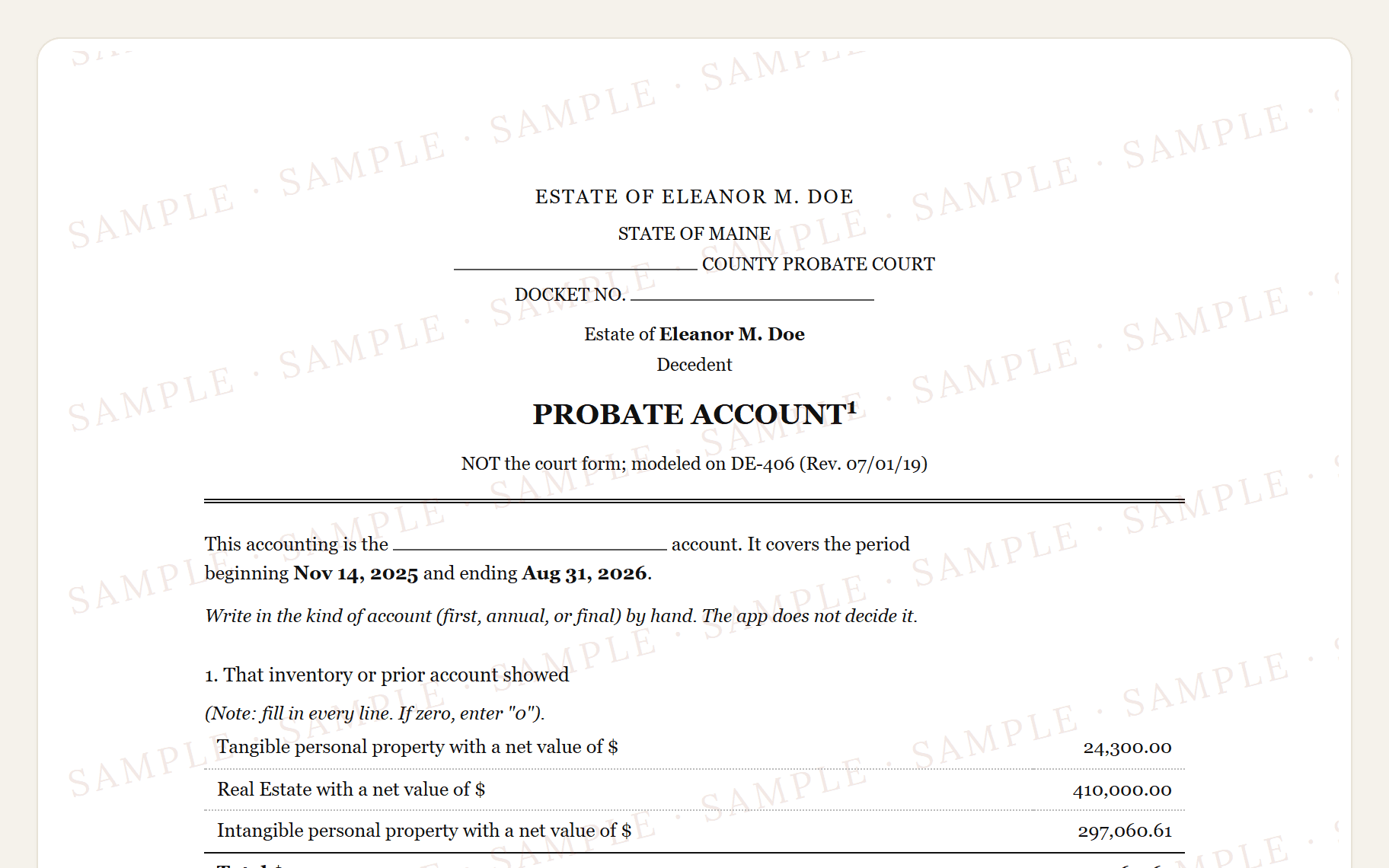
Recording is free for as long as the estate takes: every receipt and disbursement with its date and description, distributions per beneficiary, and a balance that checks itself as you go. ExecutorLedger builds Maine-style documents from those records, an inventory shaped like DE-405 and an account shaped like DE-406, ready to transcribe if you end up needing to file or hand a copy to distributees. Neither is the court's own form, and your attorney should review them before anything is signed or sent. Usually less than one attorney hour, and typically reimbursable by the estate.
Section 5 of 5.Questions about the Maine inventory
Do I have to file the Maine DE-405 inventory with the court?
Not always. Under 18-C M.R.S. §3-706(1), you can satisfy the duty by mailing a copy to interested persons who request it instead of filing it with the court.
When is the Maine inventory due?
Generally 3 months after your appointment, valued at fair market value as of the date of death (18-C M.R.S. §3-706(1)).
The inventory is the first filing, not the last. The full Maine guide covers the accounting that follows it, every deadline with its statute, what the executor is paid, and how estates close.
This page describes Maine practice as our verified references state it; formats drift and estates differ, and none of this is legal advice. ExecutorLedger produces court-style documents for transcription. They are not official court forms. What your estate must file is a question for its attorney.